Buying Guides
Acacia vs Beech vs Bamboo for Wooden Kitchenware
Compare acacia, beech, and bamboo for wooden kitchenware: appearance, grain, durability, and best uses — plus OEM/ODM, MOQ, and compliance notes from Sentai Houseware.
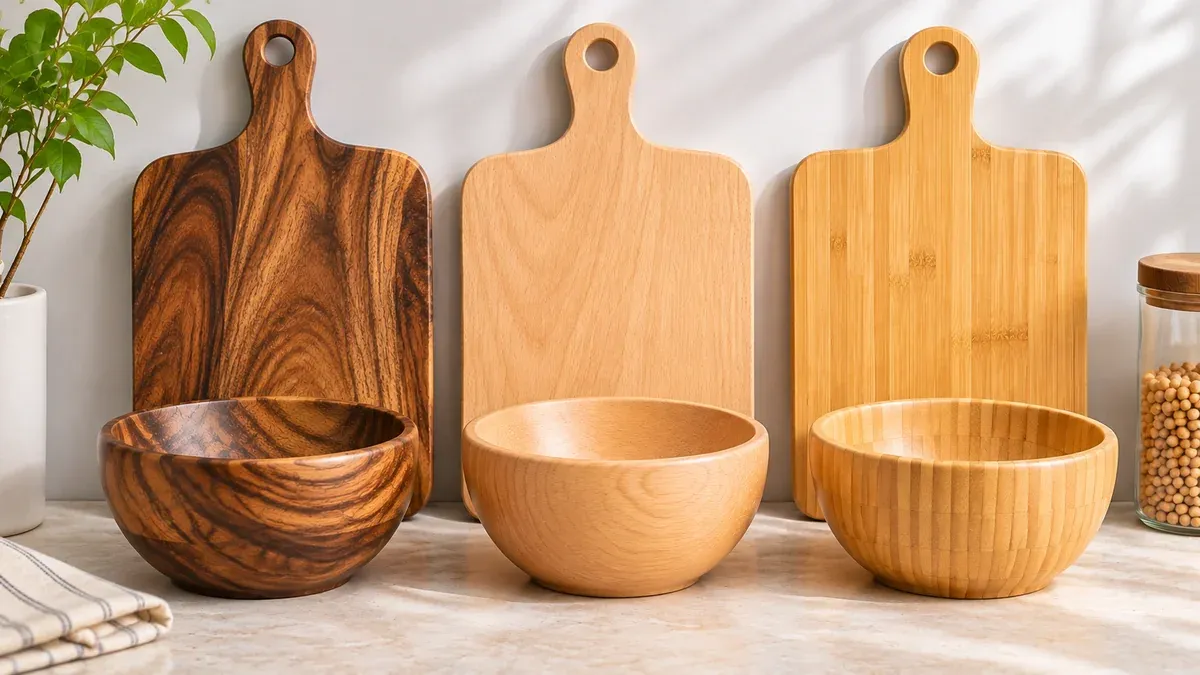
Acacia, beech, and bamboo offer different advantages for wooden kitchenware sourcing. Acacia is typically associated with warm brown tones and distinctive grain, beech with a light, relatively uniform appearance, and bamboo with a natural, linear fiber pattern. Importers, wholesalers, and private-label brands should select materials according to product type, design positioning, manufacturing feasibility, and destination-market requirements rather than material name alone.
Table of Contents
- Acacia vs Beech vs Bamboo: Material Comparison
- Which Material Works Best for Different Kitchenware Products?
- Material Selection for Wholesale and Private-Label Brands
- Finishing, Maintenance, and Compliance Considerations
- Frequently Asked Questions
- Request a Quote from Sentai Houseware
1. Acacia vs Beech vs Bamboo: Material Comparison
Choosing between acacia, beech, and bamboo involves more than comparing wood colors.
Each material has distinctive visual and structural characteristics. However, actual product performance depends on species, processing, construction, surface treatment, and product design. Importers should treat material descriptions as general guidance and confirm specifications with the manufacturer.
Acacia is commonly associated with warm brown tones and noticeable grain variation. Its appearance can make individual pieces look visually distinctive. Beech typically has a light color and fine, relatively uniform grain. This makes it relevant for brands seeking a clean, coordinated appearance across product ranges. Bamboo is botanically a grass rather than a hardwood. Manufactured bamboo kitchenware often uses processed and laminated material, so construction and bonding methods should also be considered.
Three-material comparison table
Comparison Factor | Acacia | Beech | Bamboo |
|---|---|---|---|
Typical appearance | Warm brown tones with noticeable color variation | Light cream to pale brown tones | Light natural tones, sometimes caramelized |
Grain and texture | Often prominent and varied | Typically fine and relatively uniform | Linear fiber pattern; laminated construction may be visible |
Hardness and durability | Generally suitable for many kitchenware applications; varies by species and specification | Commonly used for utensils and kitchenware; performance varies by specification | Depends strongly on processing, lamination, adhesive, and construction |
Suitable products | Serving boards, wooden bowls, selected utensils | Cooking spoons, spatulas, utensil sets | Utensils, cutting boards, selected kitchenware |
Maintenance considerations | Avoid prolonged soaking; follow approved finish instructions | Avoid prolonged moisture exposure and excessive drying | Protect joints and bonded surfaces from prolonged moisture |
Potential buyer positioning | Distinctive natural-grain collections | Coordinated, minimalist kitchenware ranges | Natural-look, bamboo-focused product collections |
Important: These are general material characteristics, not guaranteed performance results. Actual hardness, durability, and product suitability depend on the specific material supply, processing method, and manufacturing specification. Buyers should confirm relevant product details before ordering.
2. Which Material Works Best for Different Kitchenware Products?
The most appropriate material can vary significantly between cooking utensils, bowls, and cutting boards. For B2B buyers, product application should guide material selection before branding or packaging decisions.
Wooden cooking spoons and spatulas
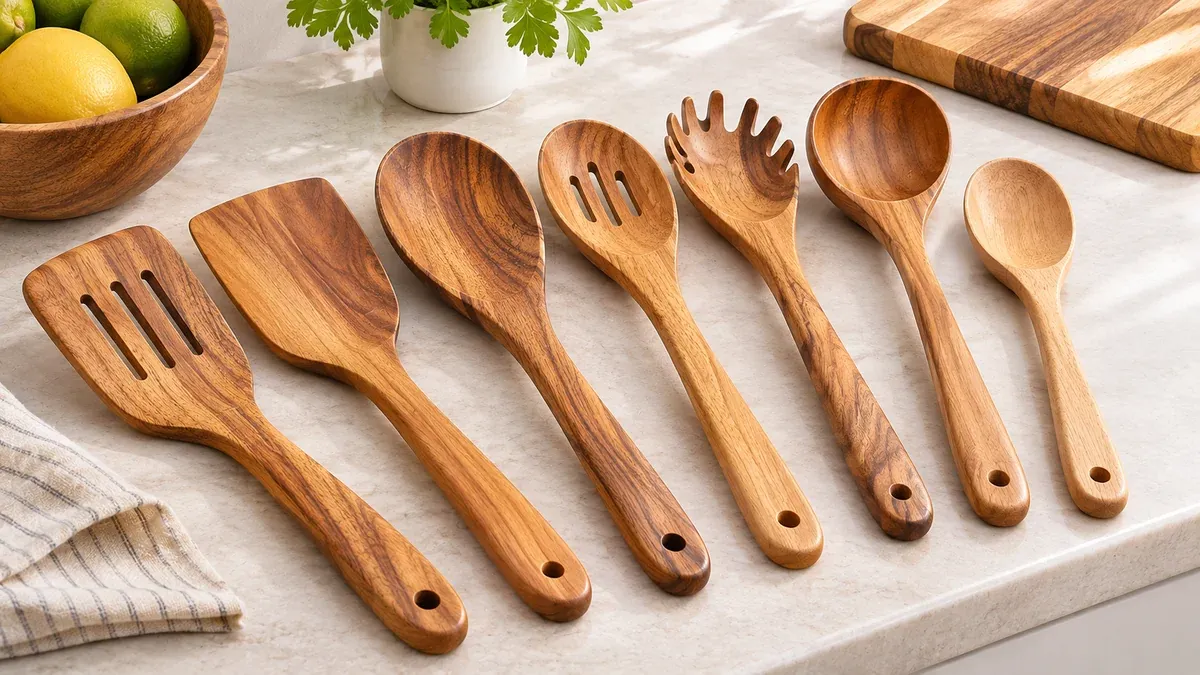
Beech is a common material choice for wooden cooking utensils because of its relatively uniform appearance and consistent handling characteristics. Acacia can also be considered when a brand prefers stronger grain variation and warmer wood tones. Bamboo utensils offer another option for buyers developing coordinated bamboo kitchenware collections. When comparing materials, importers should confirm utensil thickness, edge finishing, handle comfort, and surface treatment.
Wooden bowls and serving tableware
Acacia is often considered for wooden bowls and serving products where visible grain contributes to product presentation. Beech may be suitable for simpler, lighter-colored designs, subject to manufacturing feasibility. Bamboo bowl construction requires separate consideration of shaping, laminated components, and intended use. For all three materials, buyers should specify the required surface finish and food-contact application.
Cutting boards and serving boards
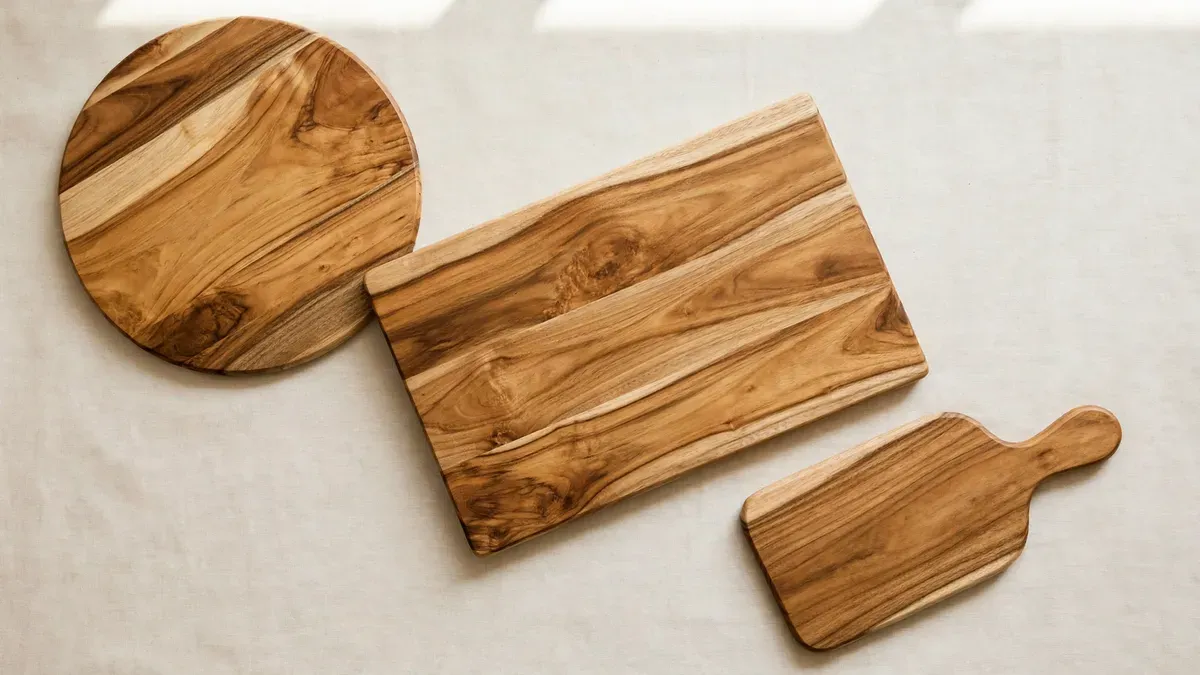
Cutting boards introduce additional considerations, including board thickness, construction, surface treatment, and intended use. Acacia may appeal to buyers seeking visually distinctive serving and cutting boards. Beech can provide a lighter, more uniform presentation, while bamboo offers a recognizable natural appearance. However, board performance should not be determined by material name alone. Importers should evaluate the proposed construction, including whether the board uses solid pieces, joined components, or laminated material.
Explore Wooden Cutting Boards for sourcing options. For a bamboo option, see our Bamboo Cheese Board Set.
3. Material Selection for Wholesale and Private-Label Brands
Material choice influences product appearance, assortment consistency, branding presentation, and customer expectations. For importers serving North America, Europe, South America, or Oceania, it is useful to evaluate materials against the intended sales channel rather than assuming one material is universally preferred.
Positioning different wooden kitchenware collections
Acacia-focused collections may suit brands that want to emphasize natural grain variation and visually distinctive serving products.
Beech-focused collections may suit buyers developing light-colored utensils with a consistent appearance across multiple items.
Bamboo-focused collections may suit distributors and private-label brands seeking a coordinated natural-look assortment.
These are potential merchandising approaches, not verified market-demand rankings. Regional customer preferences, retailer requirements, and actual product acceptance should be validated independently.
OEM/ODM considerations
For custom manufacturing projects, material selection should be included in the original product specification. Buyers should confirm:
- Requested material and acceptable natural color variation
- Product dimensions and construction method
- Surface treatment and finishing requirements
- Logo placement and branding specifications
- Packaging and labeling requirements
- Intended use and destination market
Natural color and grain differences should also be considered when establishing visual acceptance criteria.
Yiwu Sentai Houseware Co., Ltd. supports OEM/ODM and private-label wooden kitchenware manufacturing. Sentai's own factory in Hanjiang, Putian, China, manufactures wooden kitchen utensils, wooden bowls and tableware, cutting boards, and selected kitchen storage products.
4. Finishing, Maintenance, and Compliance Considerations
Material selection is only one part of finished-product quality. Surface treatment, construction, storage conditions, and normal maintenance can influence how wooden kitchenware performs over time.
Surface finishing and maintenance
Wooden kitchenware generally requires appropriate protection from prolonged moisture exposure. Buyers should clarify whether products require a particular food-contact-appropriate finish and what maintenance guidance should be provided to end users. For bamboo products made with laminated components, adhesive suitability and bonded-joint performance are additional considerations. No material should automatically be described as waterproof, dishwasher-safe, or maintenance-free without confirmation.
Documentation for international buyers
Sentai provides applicable information on FSC certification, amfori BSCI social compliance audits, and relevant FDA and LFGB food-contact requirements. EUDR due diligence support is addressed separately. Importers should request relevant documentation for their intended market and confirm its scope and applicability. FSC documentation relates to relevant forest-based sourcing and chain-of-custody requirements, while other certifications and food-contact documentation may address different compliance areas. For European Union sourcing projects, Sentai can cooperate with EUDR due diligence support. Applicable material traceability information and documentation should be discussed according to the product and destination market. Buyers should not assume that a material designation alone establishes legal compliance.
MOQ and production planning
Sentai's MOQ is 500 pcs for single-item products or 500 sets for multi-piece sets, while production time is 20–30 days. Actual MOQ and production schedules depend on the confirmed product design, material specifications, and order requirements. Material availability and product feasibility should be confirmed before finalizing a wholesale order.
Frequently Asked Questions
1. Is acacia better than beech for wooden kitchen utensils?
Not necessarily. Acacia is often selected for its distinctive grain and warm tones, while beech offers a lighter and more uniform appearance. Product type, performance requirements, and design positioning should guide the choice.
2. Is bamboo as durable as hardwood kitchenware?
Bamboo kitchenware can be suitable for many applications, but durability depends on processing, construction, bonding, and product design. Buyers should confirm the proposed construction and intended use.
3. Which material is suitable for private-label wooden bowls?
Acacia, beech, and bamboo may all be considered, depending on the desired design and manufacturing method. Material availability, shaping feasibility, and surface finish should be confirmed before ordering.
4. Can Sentai manufacture customized wooden kitchenware?
Yes. Sentai supports OEM/ODM and private-label manufacturing. Specific material availability, product dimensions, and construction methods should be confirmed for each project.
5. What is Sentai's MOQ and production time?
Sentai's MOQ is 500 pcs for single-item products or 500 sets for multi-piece sets, and production time is 20–30 days. Exact arrangements depend on the confirmed product and order specification.
Request a Quote from Sentai Houseware
Selecting the right material is an important step in developing a wooden kitchenware collection for wholesale or private-label markets. Yiwu Sentai Houseware Co., Ltd., operating since 2010, is a B2B wooden kitchenware manufacturer with its own factory in Hanjiang, Putian, China. Sentai supplies wooden kitchen utensils, wooden bowls and tableware, cutting boards, and selected kitchen storage products.
Whether you are comparing acacia, beech, and bamboo or developing a specific product design, contact Sentai to discuss material options, manufacturing feasibility, customization requirements, and order planning.
Send your sourcing requirements to discuss material options, manufacturing feasibility, customization, MOQ, and production planning.